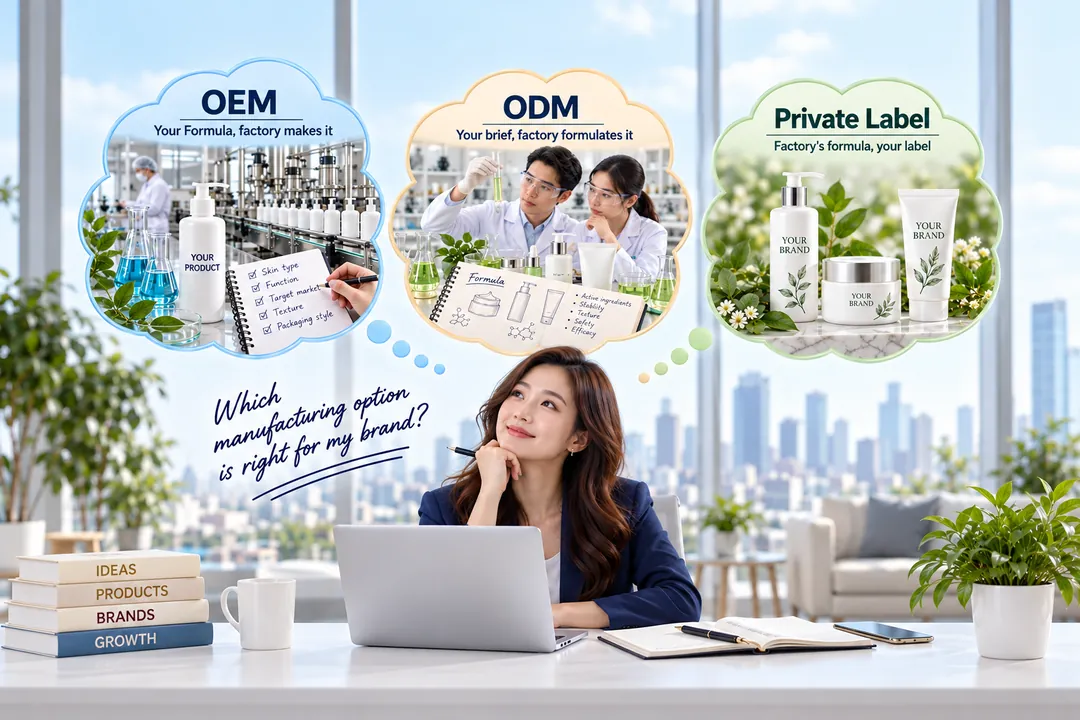
OEM & ODM
OEM vs ODM vs Private Label Which Manufacturing Model Fits Your Supplement or Skincare Brand?
Compare OEM, ODM & Private Label on product development, customisation and time to market for your supplement or skincare brand.
8 min read

Halal certification for brand owners
 Written by: Yee Ming
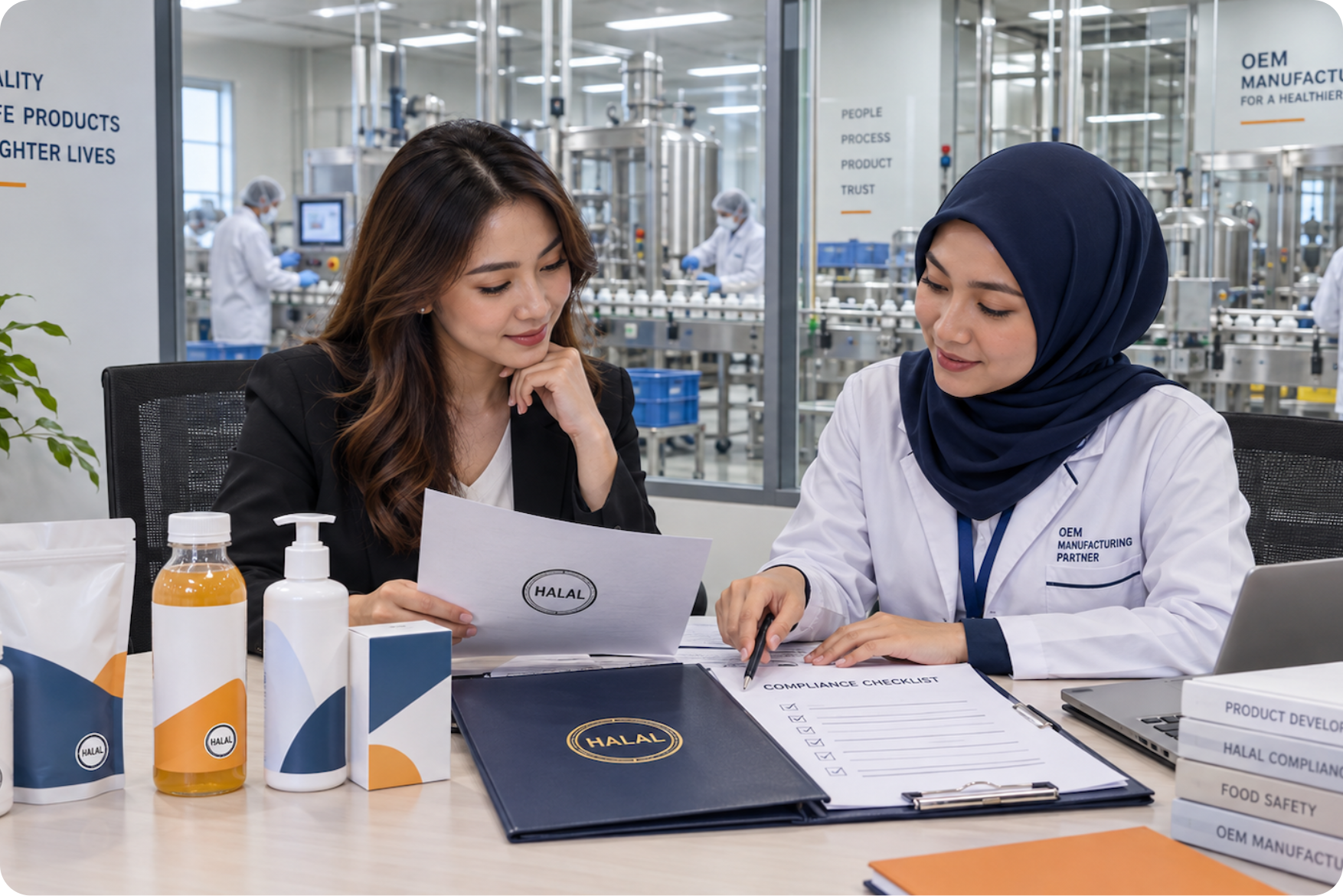
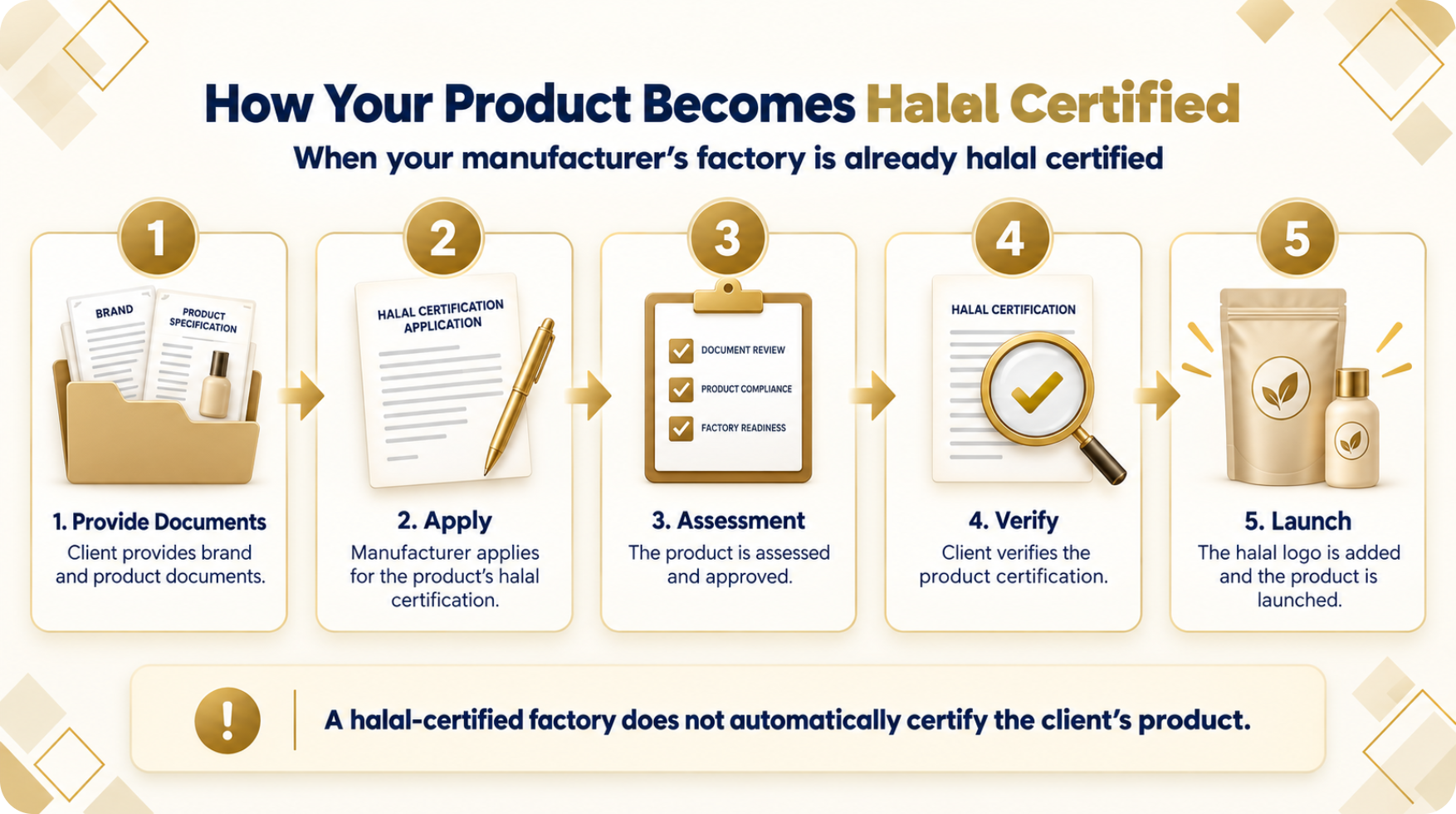
You do not always need a separate JAKIM Halal certificate in your own company’s name. Your manufacturer can apply on your behalf. But your branded product needs the appropriate product certification before it carries the Malaysia Halal logo. The factory’s OEM certificate alone is not enough. JAKIM’s brand-owner circular and amended certification manual explain the distinction.
Your sample is approved and the designer is finishing the label. Before adding the logo, ask the manufacturer to show which certification records cover the product you will sell. If certification is still pending, agree what needs to happen before you release the artwork.
Whether you are launching a drink, developing skincare or moving an established supplement to another factory, settle this before committing to packaging.
An OEM certificate covers the manufacturer’s contract manufacturing service: making products for other businesses. Product certification covers the relevant products under the applicable product scheme. JAKIM’s Circular 1/2018, paragraphs 3, 6 and 7 establishes this separation.
The distinction remains in the amended Manual Prosedur Pensijilan Halal Malaysia (Domestik) 2020, effective 1 April 2026. Section 18(8)(b) says:
Skim ini tidak boleh digunakan sebagai perakuan halal ke atas produk yang dikilangkan
In English, the OEM scheme cannot serve as halal certification for the manufactured products. Section 41(6) also requires product-scheme certification for products carrying the logo. Amended MPPHM, printed pages 50 and 85
When a supplier says “our factory is halal certified”, ask for its relevant OEM certificate and the records covering your product. You need to check both the manufacturing service and your branded product.
The brand owner can apply directly, or the contract manufacturer can apply on the owner’s behalf and register the product’s brand. JAKIM sets out both routes in Circular 2/2017, paragraph 5.
Before the brand owner applies for product certification, check that the appointed manufacturer already holds the relevant OEM-scheme certificate. This is required by Circular 1/2018, paragraph 6. Confirm which application route meets the requirements for your arrangement, then agree who handles it and what each party must supply.
| Your Arrangement | What to Establish | Practical Reason to Consider It |
|---|---|---|
| Your company applies as the brand owner | Your role as applicant, the appointed factory and the documents each party supplies | Your team will manage the application and ongoing correspondence directly |
| The manufacturer applies on your behalf | How your brand and product will be registered, the certificate holder and required packaging details | The manufacturer will coordinate the process within an agreed scope |
If the supplier sends only its OEM certificate, ask whether your branded product’s certification is pending or approved. Request the supporting product records.
If the manufacturer applies, paragraph 6 of the same circular requires its information to appear on the product’s packaging. Confirm the wording with the people responsible for the application and label review. JAKIM Circular 2/2017
Also distinguish applying on your behalf from helping with your application. A supplier might prepare documents while your company remains the applicant. Ask it to describe the arrangement in writing rather than relying on ‘Halal included’ in a quotation.
Manufacturer coordination may suit a small team launching its first product. A brand with regulatory staff may prefer direct correspondence. In either case, agree which records you will receive and who will respond when a distributor asks for proof.
The label, certification records and manufacturing arrangement need to agree. If you discover a mismatch after printing, you have already paid for packaging you may need to change.
That correction may also affect product photography, marketplace listings and distributor launch materials. Give the designer and purchasing team a clear approval point so they know when to proceed.
Keep separate dates for product development, application submission, the expected authority decision and packaging release. A completed formula or a submitted application does not mean the product is certified.
When comparing quotations, ask whether the price includes application preparation, official fees, applicable testing, label review and later amendments. Request the exclusions too, along with responsibility for renewals and changes.

Compare the documents with the product you intend to sell. The check should leave you with a clear record of what is covered, what remains unresolved and who will confirm the final label.
Ask for the current certificate and the relevant product listing or annex. A cropped logo image gives you too little to compare.
Create a simple record containing the certificate holder, reference number, scheme, premises, product and brand details, and expiry date. Keep the date you checked it as well.
Use JAKIM’s Semakan Status Halal page to reach the Malaysian Halal Directory. JAKIM identifies it as the source for checking certified products, premises and services.
Compare the directory result with the supplier’s documents and check that certification is still valid. An expiry date in the future does not rule out suspension or cancellation. If the status or details are unclear, ask the supplier and issuing authority to resolve it. A failed search alone does not prove wrongdoing; it leaves the check unfinished.
Electronic certificates are legitimate: JAKIM introduced e-Cert for approvals on or after 5 May 2025, allowing approved applicants to print certificates through MYeHALAL. Verify the record rather than judging authenticity by the paper. JAKIM’s e-Cert announcement
Place the proposed label beside the product records. Compare the name, brand, variant and manufacturing location. Highlight anything that differs or is missing.
For example, a certificate for an original-flavour drink does not establish coverage for a new chocolate variant. Ask how the new version will be covered and keep the supporting reference.
Name the people who will confirm product coverage and review the final label. Keep one approved artwork version linked to the supporting documents.
Use the same approved artwork for the printer and your marketing team. It should be released only after product coverage and label requirements have been confirmed. Assessment does not guarantee approval; keep logo-bearing artwork on hold while certification is pending.
This is an illustrative planning exercise, not a customer case or an EDMARK Industries SDN BHD quotation.
Suppose you are launching a powdered drink under a new brand. Your manufacturer has supplied a valid OEM certificate. Your branded product’s certification is still pending, and the printer is waiting for artwork containing the halal logo.
For the exercise, assume 5,000 cartons at RM0.80 each. The print commitment is:
5,000 × RM0.80 = RM4,000
That RM4,000 is money committed before the label question is settled. It is not necessarily a total loss; the outcome depends on what needs changing and whether the packaging can be used.
| Choice | What You Gain | What Remains Unresolved |
|---|---|---|
| Approve the logo-bearing artwork now | Keep the proposed print slot | Product certification is pending; the label may need revision |
| Hold print approval while completing the evidence check | Keep the artwork editable | You may need a later print slot and a revised launch date |
Hold approval of the artwork containing the Halal logo. Continue preparing sales copy and distributor information without an unsupported Halal claim.
Release the artwork when product certification is granted, the details match and label review is complete. Give the designer and printer that approval in writing.
Halal certification and NPRA requirements answer different questions. Keep them as separate items in your launch plan.
For cosmetics, the National Pharmaceutical Regulatory Agency permits halal-logo use on a notified product only when the product has the relevant halal certification. A cosmetic notification does not itself provide that certification. NPRA, “9. Halal”
For registered health supplements, NPRA’s July 2026 Drug Registration Guidance Document, section 7.14(d), requires a variation application for approval to add the halal logo after halal certification is granted. The certificate supports that application. NPRA DRGD, printed page 46
If you are unsure whether your proposed drink falls under food or health-supplement controls, resolve its classification before planning the submissions. NPRA maintains specific food-drug interface guidance for this boundary.
If your product uses capsules, gelatin or collagen, raise this early with the manufacturer. JAKIM’s November 2025 circular introduces self-monitoring requirements for these categories. Ask which requirements apply to your ingredients and who handles sampling and laboratory records. Avoid assuming one testing schedule fits every project. JAKIM Circular 1/2025
Recheck certification before treating the new factory’s output as covered. The amended manual lists a change of contract manufacturer as a circumstance in which the authority may cancel the certificate. Amended MPPHM, section 39(1)(c), printed page 83
Holding the certificate in your company’s name does not make it automatically transferable to a new factory. If easier factory changes are your reason for applying directly, confirm the approval implications before choosing that route.
Before agreeing a changeover, list the old factory’s remaining batches, unused packaging and planned last production date. Ask the new manufacturer to map the documents and approvals needed for its first batch. Agree how the two sets of stock will be identified.
Use the same review habit when changing a formula, ingredient supplier, brand name or repacking arrangement. Give the responsible team the exact proposed change and ask what must happen before it is implemented.
You can copy this into your next supplier enquiry:
We plan to sell [product and variant] under [brand] in [market]. Please confirm whether we will apply for halal certification directly or whether you will apply on our behalf, and whose name will appear on the certificate.
Please provide your relevant OEM certificate and explain how our branded product will receive product certification. Identify the manufacturing premises, documents we must supply, costs included and excluded, and what must be completed before we approve artwork containing the halal logo.
Please also explain who handles renewals and changes to the product, ingredients or manufacturing site.
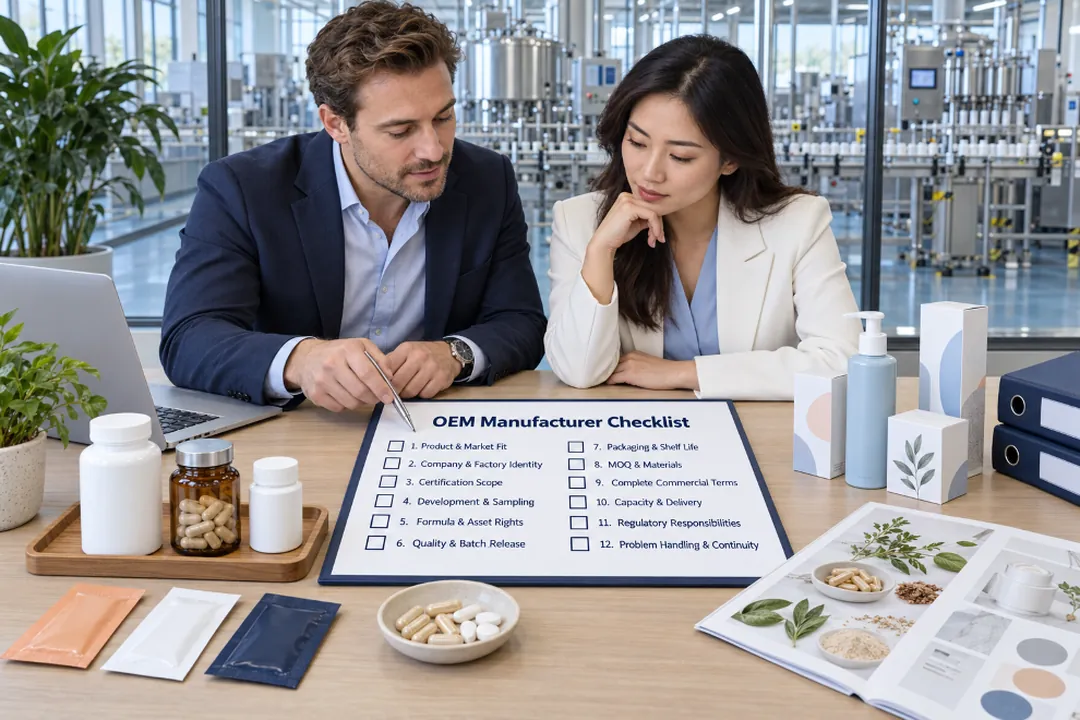
Keep the reply with your product brief so the designer, purchasing team and manufacturer work from the same agreement. For a wider supplier review, use our OEM manufacturer checklist.
Support
Practical answers about manufacturing support, product certification and what to confirm before launch.
EDMARK Industries SDN BHD supports product development, packaging, manufacturing and regulatory registration work. If you need a Halal-certified product, include that in your brief. Ask us to set out the proposed application route, documents, costs and responsibilities before you approve the project. You can review our manufacturing services or send your product brief.
MOQ depends on the product format, formulation and packaging. Send your proposed pack size and first-order volume so we can discuss the production requirement. Ask about certification charges separately: a production MOQ does not tell you which application costs or ongoing support are included. Our MOQ guide explains the stock commitment to check.
Yes. Bring your formula or describe the product you want to develop. Tell us about the intended market and any Halal requirements at the start, including ingredients such as gelatin, collagen or capsule shells. Agree who supplies the ingredient evidence and what testing is needed before approving the formula and packaging.
Our compliance page sets out our manufacturing certifications. For your project, ask for the current certificates and confirm their scope. GMP and Halal certification cover different requirements, and a factory’s OEM Halal certificate alone does not establish that your branded product is certified. Confirm the product application and label requirements before printing the logo.
We manufacture food and beverages, health supplements, traditional products, personal care and home care. Include the product category and destination market in your enquiry so we can discuss the relevant manufacturing and documentation requirements. For supplements and skincare, plan the applicable NPRA work alongside the Halal application; one process does not replace the other.
This guide covers the Malaysian domestic certification decision. Confirm current requirements for your product and intended market with the responsible authority. The carton quantities and costs above are illustrative.
Let’s build your next product
From formulation to manufacturing and scale-up,
our team is ready to help bring your product to market.
OEM & ODM
Compare OEM, ODM & Private Label on product development, customisation and time to market for your supplement or skincare brand.
Budgeting
Learn how order quantity affects unit cost, packaging & inventory risk, & choose a production volume that fits your budget.
OEM & ODM • Packaging • Production
Choose an OEM manufacturer by checking product fit, compliance, quality & costs for a confident launch & reliable supply.
Compliance
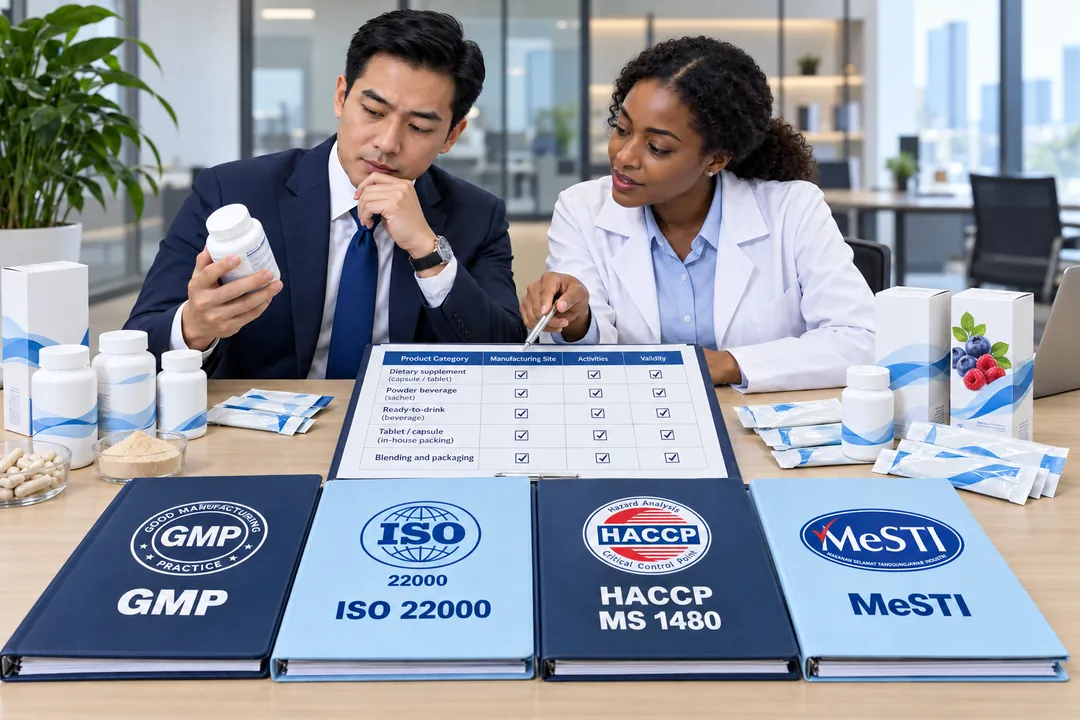
Learn what GMP, ISO 22000, HACCP MS 1480 & MeSTI cover, and how to assess a manufacturer's certifications before choosing an OEM partner.
Packaging • Food & Beverage • Supplement
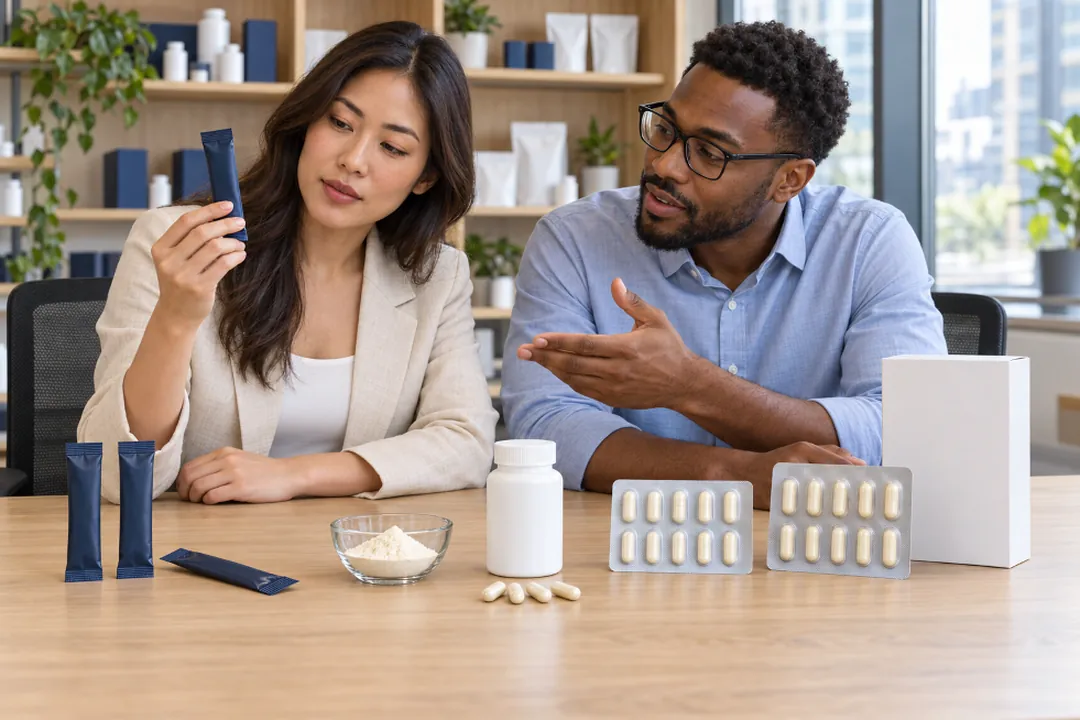
Compare sachets, bottles & blister packs to choose packaging that suits your supplement, protects quality & offers convenience.
Food & Beverage
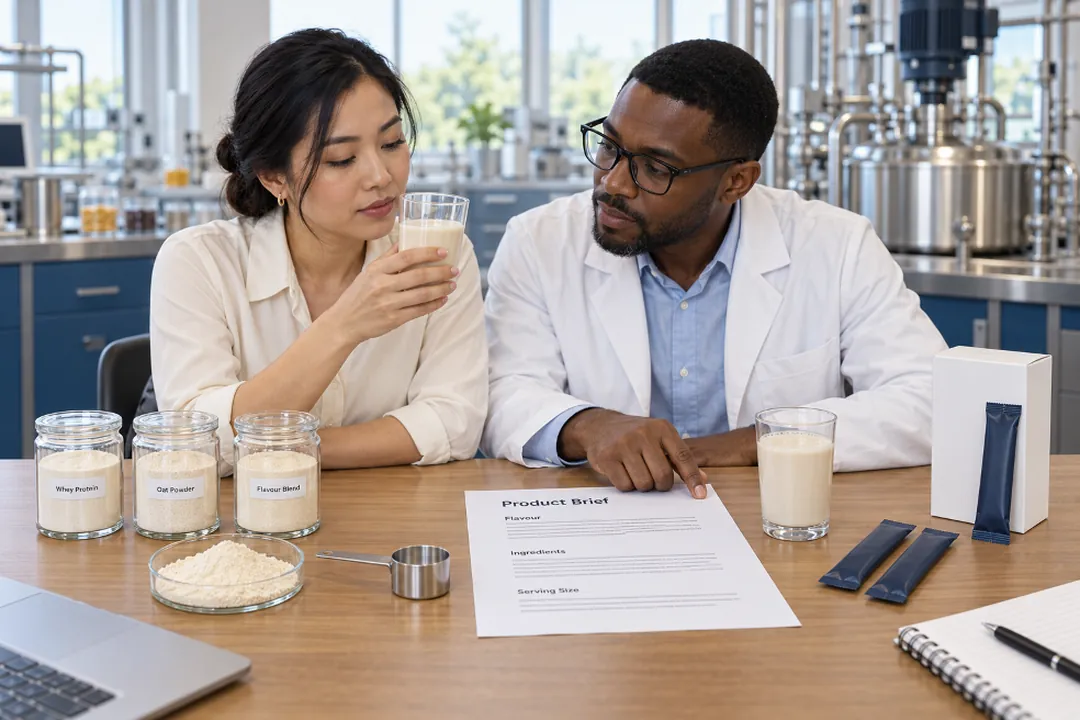
Explore the key steps in powdered beverage development, from defining your product brief to formulation, sample approval and production.
Home Care
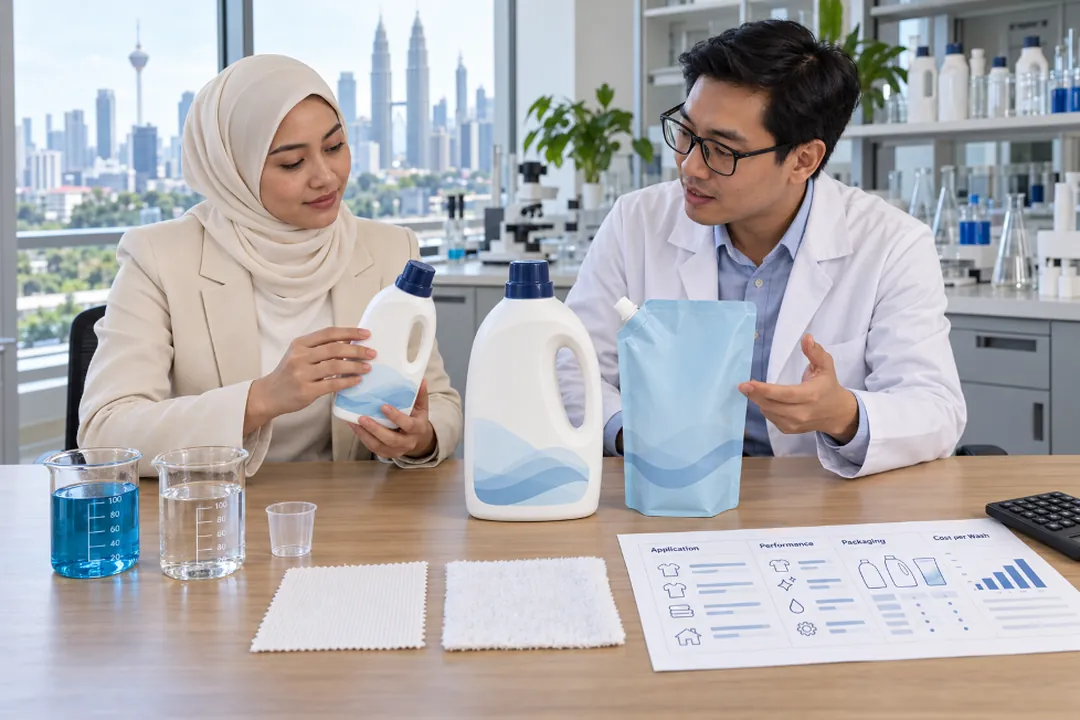
Learn how to define your detergent formula, choose packaging & work with an OEM manufacturer to launch your brand.

Packaging • Food & Beverage
Learn what to check on food labels in Malaysia before printing packaging to avoid costly mistakes & delays.

Are you sure you want to
delete this 1 Item?